


Description
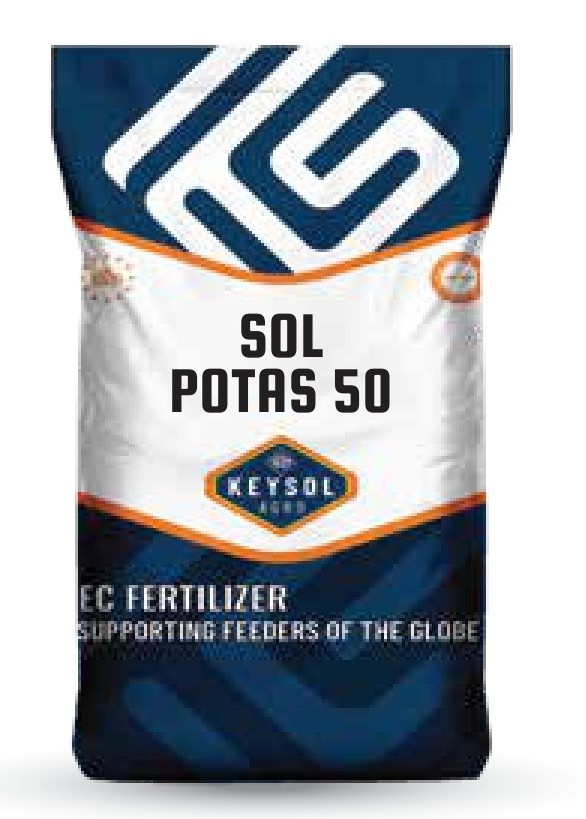
It is a fertilizer with a high potassium content, completely soluble in water, with the formula K2SO4. It contains potassium equivalent to 50% K2O
and 18% S (54% SO4). It can be easily used with drip irrigation systems. Potassium has positive effects on fruit quality.
It is applied during the fruit browning period. It helps increase fruit plumpness and color.
| Guaranteed Content | (W/W)(%) |
| Water Soluble Potassium Oxide (K20) | 50% |
Application Method and Dosages
The doses recommended for foliar application are applied every 15-20 days, and the doses recommended for drip irrigation are applied weekly. Amount to be used;
It may vary due to reasons such as climate, soil type, air temperature, product type, productivity status and irrigation system differences. Use where necessary. These
values are recommendations. Appropriate doses are; It can be determined by experts in this field according to the results of agricultural analysis
| Plant Name | Application Period | Foliar Application | Drip Irrigation kg/1000 m2 |
| Vegetables (tomato, pepper, eggplant, cucumber, melon, watermelon) | From the period when the fruits are large enough to 15-20 days until harvest | to 100 liter water 250-300 g | 3-4 kg / da |
| Soft and stone fruits, Olives | In the period from when the fruits become hazelnut-sized until 15-20 days before harvest | to 100 liter water 250-300 g | 3-4 kg / da |
| Banana, Strawberry, Vineyard, Kiwi, Citrus | In the period from when the fruits become hazelnut-sized until 15-20 days before harvest | to 100 liter water 250-300 g | 3-4 kg / da |
| Hazelnuts, Walnuts, Pistachios | During the filling period | to 100 liter water 250-300 g | 3-4 kg / da |
| Corn, Sunflower | Starting from the period when the plant height is 40-50 cm | to 100 liter water 250-300 g | 3-4 kg / da |
| Potato, Sugar Beet, Carrot | From the beginning of tubers swelling until harvest | to 100 liter water 250-300 g | 3-4 kg / da |
| Wheat, Barley, Paddy | From the stranding period to the milking period | to 100 liter water 250-300 g | – |
| Cotton | From comb formation to harvest | to 100 liter water 250-300 g | 3-4 kg / da |
| Onion, Garlic | Starting from the head enlargement period | to 100 liter water 250-300 g | 3-4 kg / da |
| Beans, Chickpeas, Lentils | From fruit setting | to 100 liter water 250-300 g | 3-4 kg / da |
| Vegetables with edible leaves, Cut Flowers | During the development period | to 100 liter water 250-300 g | 3-4 kg / da |